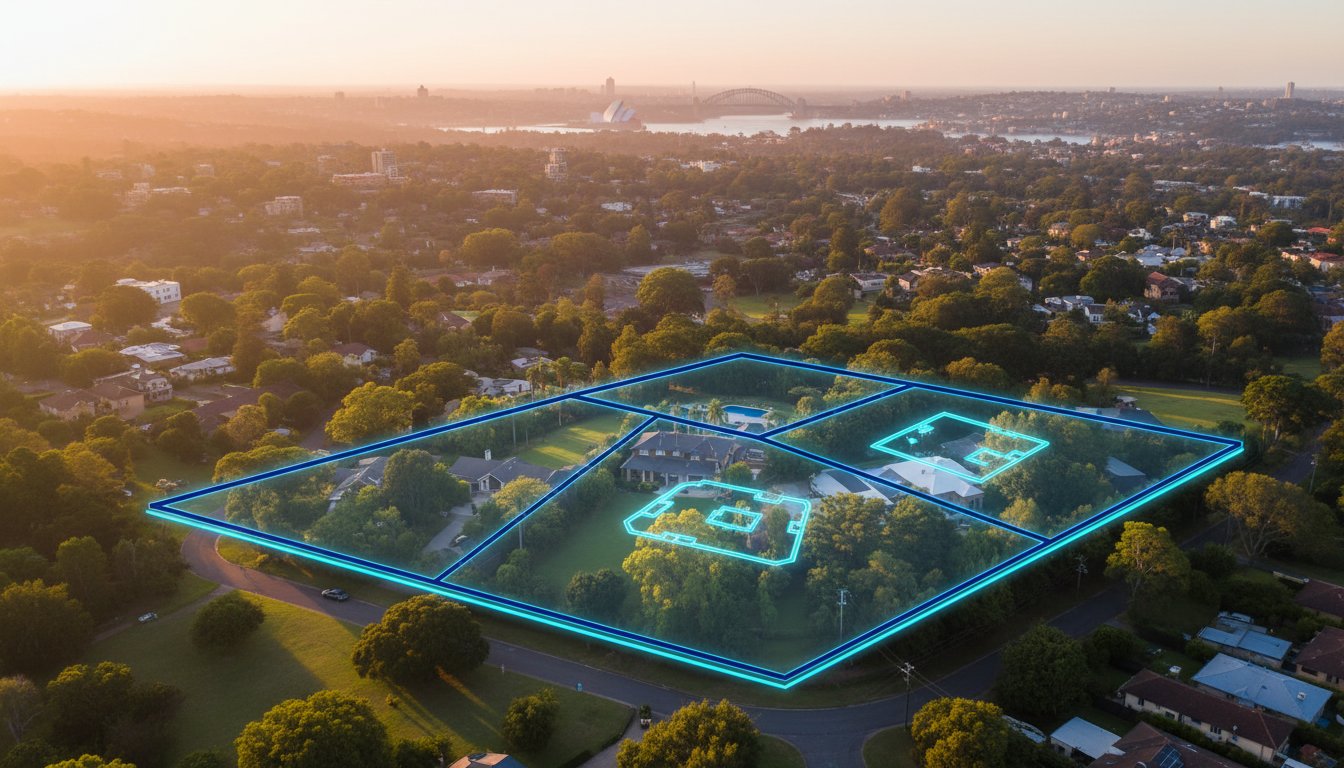
What if the most significant value in your Sydney estate isn’t the structure itself, but the invisible lines waiting to be drawn? For many landowners in 2026, the prospect of a subdivision survey represents a doorway to generational wealth, yet the process remains shrouded in technical complexity. You likely feel the weight of evolving NSW council requirements and the legitimate concern that hidden costs might derail your vision. It’s a delicate balance to strike between ambitious development and the rigorous demands of legal compliance.
At Hill & Blume, we believe your property journey should feel like a partnership built on integrity and professional grace. This guide promises to demystify the land division process, offering you a bespoke roadmap to manage the DA process without the typical stress. We’ll explore the essential lifecycle of a subdivision, ensuring you gain the peace of mind that comes from expert oversight. From the first precise boundary measurement to the moment you hold your new property titles, we’re here to ensure your transition is as seamless as it is profitable.
Key Takeaways
- Discover how a bespoke subdivision survey acts as the master key to unlocking the hidden equity within your Sydney or Central Coast property.
- Identify whether Torrens, Strata, or Community titling offers the most elegant and profitable path for your unique land division goals.
- Gain a clear roadmap of the NSW development lifecycle to approach council requirements and the DA process with a sense of calm confidence.
- Uncover the importance of managing Section 88B instruments and easements to protect the future value and legal integrity of your new titles.
- See how a partnership with Hill & Blume provides the sophisticated oversight and deep local knowledge required to turn your vision into a seamless reality.
What is a Subdivision Survey? Defining Your Property’s Future
A subdivision survey is far more than a simple technical drawing. It’s the professional measurement and legal mapping required to split a single land title into two or more distinct parcels. Think of this process as the master key for property development across Sydney and the Central Coast. While many owners look at their land and see a garden or a paddock, a surveyor sees a complex grid of legal rights and obligations that must be meticulously documented.
There’s often a significant disconnect between the physical world and the legal one. A fence line might have stood for 30 years, yet it rarely represents the true legal boundary with absolute precision. A registered surveyor translates your vision into a formal plan that meets the exacting standards of the NSW Land Registry Services (LRS). This ensures your project moves from a conceptual sketch to a registered asset with its own unique identity and value.
The Value Proposition: Why Subdivide in 2026?
Unlocking equity is the primary driver for sophisticated landowners in 2026. By excising a portion of a larger lot, you’re essentially creating a new sellable asset from your existing holdings. In Sydney’s high-demand suburbs and throughout Newcastle, dual occupancy trends are reshaping residential density. You might choose to subdivide for several strategic reasons:
- Asset Liquidation: Selling a portion of your land to pay down debt or reinvest elsewhere.
- Multi-generational Living: Creating a separate title for a secondary dwelling to house family members.
- Portfolio Growth: Developing multiple dwellings on a single site to increase rental yields.
This curated approach to land use allows you to maximize the utility of every square meter, ensuring your property works as hard as you do. It’s about more than just profit; it’s about creating a bespoke lifestyle solution that serves your family for decades to come.
The Registered Surveyor’s Mandate
In New South Wales, the law is clear: only a Registered Land Surveyor can legally sign a subdivision plan. This mandate exists because the work sits at the precise intersection of high-level mathematics and property law. At Hill & Blume, we ensure every measurement aligns with the integrity of the NSW title system, protecting both your investment and the community’s trust. A Plan of Subdivision is a formal legal instrument that, once registered with the NSW LRS, creates new certificates of title and defines the unique identity of each new parcel. The foundation of this legal precision rests on a rigorous cadastral survey, which establishes the definitive boundary measurements that underpin every new title created through the subdivision process. Understanding how to select the right professional for this role is equally important, and our 2026 guide to choosing a surveyor in Sydney provides the clarity you need to make a confident, informed decision.
Torrens, Strata, or Community? Choosing Your Subdivision Path in NSW
Selecting the right title system is perhaps the most consequential decision you’ll make in your development journey. In New South Wales, the path you choose dictates how you’ll manage the land and how future buyers will perceive its value. Whether you’re working within the coastal constraints of the Northern Beaches or the expansive lots of the Central Coast, your subdivision survey must align with the specific title framework that best serves your vision. This choice isn’t merely a legal formality; it defines the very lifestyle and marketability of the finished project.
Torrens Title: The Gold Standard of Land Ownership
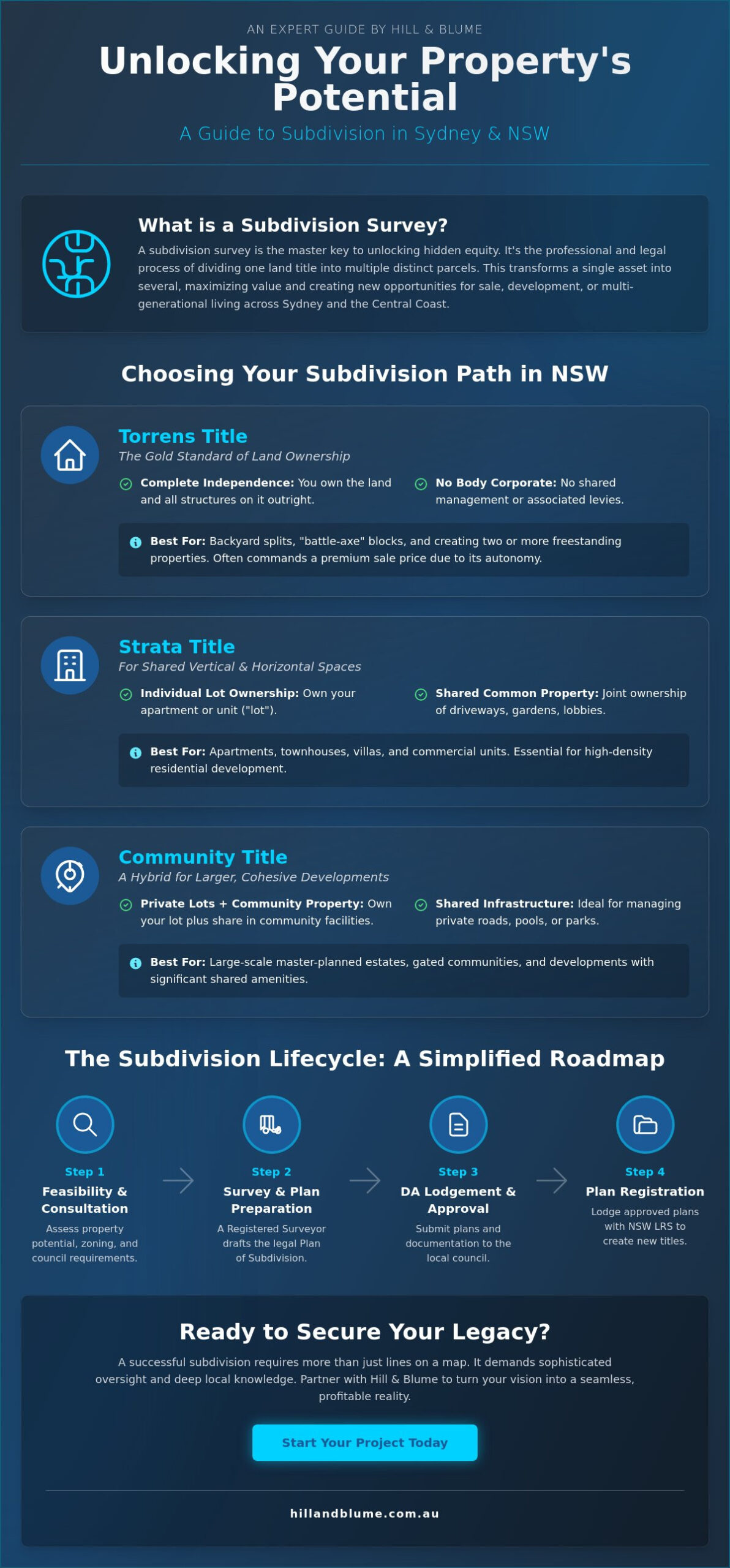
Torrens Title remains the most sought-after form of ownership in Sydney and Newcastle because it offers complete independence. When you subdivide under this system, you own the land and the structures upon it entirely, without the need for a body corporate or shared management. This is the traditional choice for backyard splits or creating a “battle-axe” block, where a new lot is tucked behind an existing home with its own private driveway. Because it offers the highest level of autonomy, Torrens Title often commands a premium sale price. To ensure your boundaries are legally robust from the outset, engaging experts for Hill & Blume Boundary Surveys is an essential first step in securing your property’s integrity.
Strata and Community Titles: Shared Visions
Strata Title is the preferred vehicle for townhouses, villas, and apartments. It allows for the vertical and horizontal division of space, creating individual lots while designating shared areas like driveways or gardens as “common property.” In larger developments across Sydney, Community Title offers a middle ground, allowing for shared infrastructure like private roads or community facilities while maintaining more land-based autonomy than a standard strata plan. A surveyor’s role here is highly technical; they must meticulously define where a private lot ends and shared space begins. This clarity is vital for future insurance, maintenance, and the peaceful enjoyment of the residents. For high-density North Shore projects, engaging a dedicated strata plan surveyor in Crows Nest ensures your plan meets the stringent precision standards required for complex apartment and townhouse developments. If you’re unsure which path aligns with your investment goals, we invite you to reach out for a personal consultation to discuss your site’s unique potential.
Your local council’s Local Environmental Plan (LEP) will often influence this choice. For instance, minimum lot sizes in the Northern Beaches Council area differ significantly from those in the Central Coast Council, which might dictate a strata solution over a traditional Torrens split. A professional subdivision survey provides the data required to navigate these local nuances with confidence, ensuring your project meets the bespoke requirements of your specific region. By understanding these legal structures early, you can avoid the friction of council red tape and move toward registration with a sense of calm confidence.
The Lifecycle of a Subdivision: A Step-by-Step NSW Roadmap
Understanding the lifecycle of a land division is essential for maintaining your peace of mind throughout the development process. It’s a journey of technical precision that transforms a single vision into multiple legal entities. While the process may seem daunting, a professional subdivision survey provides the data needed to move through each phase with confidence. This roadmap ensures your project stays on a curated path toward registration and value creation.
Navigating Council Approval (DA vs. CDC)
The first phase begins with a Contour and Detail Survey. This is your project’s foundation, capturing every slope, tree, and existing structure with absolute accuracy. In 2026, many Sydney landowners are utilizing the State Environmental Planning Policy (SEPP) to bypass traditional Development Applications (DA) through the Complying Development Certificate (CDC) pathway. This can reduce approval times by up to 30 percent compared to standard council queues. However, success hinges on addressing the ‘Conditions of Consent’—a meticulous checklist that your surveyor manages to ensure every requirement is satisfied.
Once approval is secured, the physical transformation begins. We provide the construction set-out to ensure every fence, pipe, and boundary is placed exactly where the approved plan dictates. This precision prevents costly legal disputes or building errors. After construction and infrastructure works are finished, a final cadastral survey is conducted. This is the moment your subdivision survey becomes the definitive legal record of the new parcels.
The Final Push: Registration and Titles
The final phase is purely administrative yet critically important for your equity. Your surveyor liaises with solicitors and the NSW Land Registry Services (LRS) to lodge the final documents. Once the LRS registers your plan, the old title is cancelled and new certificates of title are issued. This is the moment your property potential is officially unlocked, allowing for the sale or separate financing of the new lots.
In the current 2026 landscape, registration times at the LRS typically range from two to four weeks once all council seals are obtained. For councils in Newcastle and Sydney, the entire end-to-end journey can take between six and twelve months depending on the complexity of your site’s infrastructure requirements. This timeline underscores why a partnership with a trusted local expert is your greatest asset. It ensures that every technical hurdle is cleared before it becomes a delay, keeping your project moving seamlessly toward completion.
Beyond the Boundary: Addressing Easements, Covenants, and Section 88B
While the physical boundaries are the most visible result of a subdivision survey, the true legal architecture lies within the documentation that accompanies it. In New South Wales, the Section 88B instrument is the critical document that governs what can and cannot happen on your newly created parcels. It’s the “fine print” that ensures long-term harmony between neighbors and the surrounding infrastructure. Managing these elements requires a discerning eye, as they directly influence both the utility and the market value of your land.
Easements and Site Constraints
An easement is a legal right to use another person’s land for a specific purpose. This often involves identifying “burdened” parcels, which provide the space, and “benefited” parcels, which receive the service. Common examples in Sydney developments include drainage for stormwater, electricity access, or a Right of Way for a shared driveway. Failing to identify a hidden sewer easement during the planning phase can halt a subdivision entirely, leading to costly redesigns or council rejections. Our Professional Surveying Services are designed to uncover these constraints early, providing you with a clear and honest assessment of your site’s potential.
Covenants and Restrictions on Use
Covenants are essential for maintaining the curated feel of premium Sydney and Newcastle neighborhoods. These restrictions might dictate architectural styles, building materials, or landscaping requirements to ensure the local character remains intact. By embedding these standards into the title, you protect the long-term integrity of the community and your investment. A Section 88B instrument functions as a permanent legal attachment to a NSW land title that creates, varies, or releases easements and covenants during the subdivision process. Drafting these complex documents is a core responsibility of your registered surveyor, who ensures that your vision for the land is legally enforceable and perfectly aligned with NSW Land Registry Services requirements. If you’re ready to discuss the specific constraints of your property, book a consultation with our expert team today.
Securing Your Legacy: Why Experience is the Ultimate Asset
A subdivision is more than a technical boundary change; it’s an act of stewardship over your property’s future. When you embark on this journey, you’re not just looking for a map. You’re seeking a partnership that respects the emotional and financial weight of your investment. Our 90-year history in the Sydney and Newcastle regions provides a depth of knowledge that newer, high-volume agencies simply cannot replicate. We’ve spent decades building deep, respectful relationships with local councils, which allows us to anticipate requirements before they become obstacles.
Choosing Hill & Blume means choosing a boutique experience where quality always takes precedence over quantity. We believe that a successful subdivision survey requires a blend of traditional integrity and a forward-thinking aesthetic. It’s about ensuring your project isn’t just compliant with the law, but is a seamless reflection of your personal vision. By prioritizing the depth of our relationship with you, we ensure that every detail is handled with the care and exclusivity your estate deserves.
The Hill & Blume Difference
Our regional passion extends from the Southern Highlands to the Central Coast, positioning us as an essential part of the local fabric. We combine the craftsmanship of traditional surveying with modern technology, utilizing high-precision GPS and drones to capture site data with absolute accuracy. This intersection of heritage and innovation allows us to provide a truly curated service. Unlike larger, clinical corporate firms, we offer you direct access to our registered surveyors. You won’t be passed between departments; instead, you’ll have a dedicated expert who understands the nuances of your land and the specific aspirations you have for its future. To ensure you’re selecting the right professional for your project, our comprehensive professional buying guide for choosing a surveyor in Sydney outlines exactly what credentials, local knowledge, and regulatory compliance to look for in 2026.
Taking the Next Step
Preparing for your land division doesn’t have to be a source of uncertainty. To begin, we recommend gathering any existing title documents or previous site plans you may have. This helps us build a comprehensive picture of your property’s history during our initial conversation. We prioritize clarity from the very first interaction, which is why we offer a Free Site Appraisal to determine the feasibility of your project. This honest assessment ensures you have the facts needed to move forward with calm confidence. If you’re ready to unlock the true potential of your land with a team that values your legacy as much as you do, we invite you to Partner with Hill & Blume for your next project.
Realizing Your Property’s True Potential
Your journey from a single land title to a multi-lot legacy is a transition that deserves meticulous care. We’ve explored how the right title system and a clear understanding of Section 88B instruments protect your investment for decades. By now, it’s clear that initiating a subdivision survey is the definitive first step toward unlocking the equity you’ve built in your estate. It’s a technical process, but with the right partnership, it becomes a seamless evolution of your land.
Hill & Blume brings over 90 years of surveying excellence in NSW to your project. Our Registered Surveyors in Sydney and Newcastle are specialists in complex Strata and Torrens Title subdivisions, ensuring your vision meets every regulatory standard with grace. We invite you to Request a Bespoke Subdivision Consultation with Hill & Blume to discuss your site’s unique feasibility. Your property’s future is waiting to be written, and we’re honored to help you craft that next chapter with confidence.
Frequently Asked Questions
How much does a subdivision survey cost in NSW for 2026?
The cost of a subdivision survey in NSW for 2026 depends on your site’s complexity, the number of new lots, and the specific council requirements. Professional fees typically cover the initial site measurements, the drafting of the legal plan, and the coordination of the lodgment process. While we provide a bespoke quote following a site appraisal, it’s helpful to view these costs as a strategic investment in your property’s equity. Accurate surveying ensures your new titles are legally robust and ready for the market.
Can I subdivide my backyard if there is an existing mortgage?
You can subdivide your property with an existing mortgage, but you must obtain formal consent from your lending institution first. Since the bank holds the certificate of title as security, they need to approve the creation of new parcels and the cancellation of the old title. This process usually involves the bank’s solicitors reviewing the new subdivision plan to ensure their security interest is maintained. We recommend starting this conversation with your lender early to ensure a seamless transition during the registration phase.
How long does the NSW Land Registry Services (LRS) take to register a new plan?
The NSW Land Registry Services (LRS) generally takes between 10 and 20 business days to register a new plan of subdivision once it’s lodged. This timeline assumes that all council seals have been obtained and the documentation is free of technical errors. In 2026, the shift toward digital lodgment through the ePlan portal has made the process more efficient than in previous years. Working with an experienced surveyor who understands the LRS’s exacting standards is the best way to avoid administrative delays.
Do I need a new survey if I already have an old one from when I bought the house?
You cannot use an old identification or boundary survey to register a new subdivision. A fresh subdivision survey is legally required to define the exact boundaries of the new lots and to meet current NSW LRS standards. Land features, such as fences and structures, often shift over time, and legal requirements for plans frequently evolve. A new survey ensures that every measurement is accurate to 2026 standards, protecting you and future owners from boundary disputes.
What is the minimum lot size for subdivision in Sydney?
Minimum lot sizes in Sydney vary significantly based on your local council’s Local Environmental Plan (LEP) and the specific zoning of your land. In many R2 Low Density Residential zones, the minimum might be 450 square meters, whereas higher density areas may allow for much smaller parcels. These rules are strictly enforced to manage local infrastructure and neighborhood character. We analyze these specific LEP requirements during our feasibility phase to confirm that your project aligns with current local planning laws.
What happens if my neighbour’s fence is over my new subdivision boundary?
If a neighbor’s fence encroaches on your new boundary, the issue must be resolved before the new titles can be registered. This situation is common and is typically managed through a boundary adjustment or a formal agreement to relocate the fence. Providing precise data through a boundary survey allows for a professional and calm conversation with your neighbor. Resolving these discrepancies early ensures the legal integrity of your new lots and prevents friction during the sale process.
Can a subdivision be done under a Complying Development Certificate (CDC)?
A subdivision can be completed under a Complying Development Certificate (CDC) if the project meets the strict criteria of the State Environmental Planning Policy (SEPP). This pathway is designed to fast-track certain residential developments, such as dual occupancies, by bypassing the traditional council DA process. In 2026, many Sydney landowners utilize this method to save time and reduce administrative hurdles. We can review your site constraints to determine if your project qualifies for this streamlined approval pathway.
Why do I need a Section 88B instrument for my subdivision?
You need a Section 88B instrument because it is the legal document that creates necessary easements, covenants, and restrictions on your new titles. Without this instrument, you cannot legally define shared rights, such as drainage lines or private access ways that cross between the new lots. It also allows you to place covenants that protect the architectural integrity and future value of the neighborhood. This document is a permanent attachment to the title, ensuring that your vision for the land is legally enforceable for years to come.
Disclaimer
The information provided in articles published on this website is for general informational purposes only. While we make every effort to ensure the accuracy, completeness, and timeliness of the content, the material is based on our understanding of the industry at the time of writing and may not reflect the most current developments, regulations, or standards. All opinions expressed in our articles are those of the respective authors and do not necessarily represent the official position of the website or its affiliates. The content should not be considered professional, legal or technical advice, and should not be relied upon as a substitute for consultation with qualified professionals